
Trash Chute Cleaning vs Basic Janitorial Cleaning
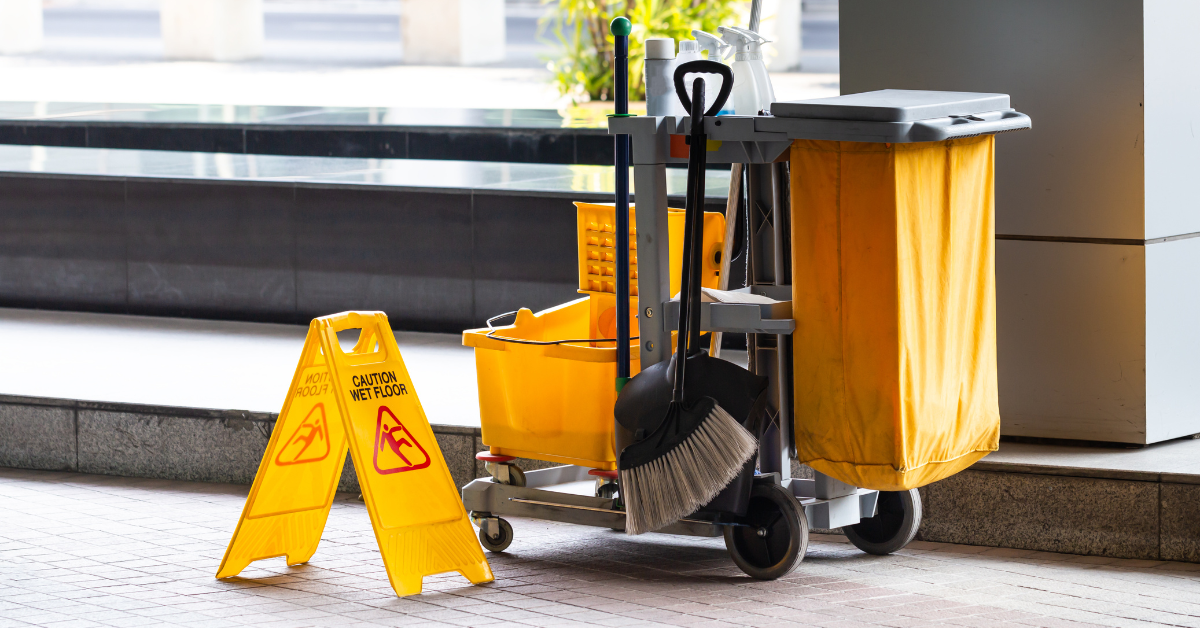
There’s a common operational blind spot that property managers and HOA boards encounter: a belief that a regular property maintenance team can effectively address all cleaning issues in a multi-family building. Standard cleaning and upkeep will ensure the property appears tidy, but certain architecturally specific elements require specialized, high-pressure maintenance processes.
Nothing highlights this contrast more starkly than the difference between regular apartment building cleaning services and professional trash chute cleaning.
For properties with vertical waste management systems, relying solely on routine surface cleaning services can hide structural, sanitary, and fire-safety risks that a standard maintenance team won’t know about and aren’t equipped to handle. Understanding these differences between trash chute cleaning and janitorial cleaning can save you money on asset protection, happy tenants, and regulatory compliance.
What Exactly IS Basic Janitorial Cleaning?
Basic janitorial cleaning is the minimum day-to-day operation that many property management teams offer. Apartment building cleaning services typically involve managing the high-visibility areas with high traffic in a property to provide an aesthetic and healthy living space.
Common Day-to-Day Janitorial Cleaning Tasks
- The sweeping and mopping of common area hallways, lobbies, and stairwells.
- The wipe down of high-traffic contact areas, such as doorknobs and elevator buttons.
- Wiping down lobbies, mailrooms, and the front entrance windows and doors.
- Dusting of apartment building fixtures and furniture, and the emptying of public waste bins.
Such jobs consist of the usage of mops, vacuums, microfiber cloths, general commercial-grade cleaners, and manual labor. Basically, basic janitorial cleaning exists on the surface, but is essential to keeping an apartment building looking good on a day-to-day basis.
What are Professional Trash Chute Cleaning Services?
Professional trash chute cleaning, on the other hand, is an intensive, highly technical process designed to address the hidden interior of a building’s vertical waste management system. Buildings use vertical waste chutes for convenience and to conceal unsightly bins from view. These chutes collect daily deposits of organic matter and moisture that lead to the accumulation of a thick layer of decaying refuse within the chute’s metal liner. This buildup releases foul odors into hallways via the stack effect and creates a significant fire hazard. Property managers across Dallas, Philadelphia, Manhattan, and Seattle who have experienced recurring tenant complaints about chute odors, drain flies, or pest sightings consistently discover the same root cause: the vertical shaft has been serviced by janitorial staff rather than a specialized chute cleaning contractor.
Equipment Used for Professional Trash Chute Cleaning vs Janitorial Cleaning
Where standard janitorial cleaning services may use brooms, dusters, commercial vacuums, and mops, trash chute decontamination specialists utilize truck-mounted, hot water, structural pressure washing equipment. The water these systems output will heat up to above 200 degrees F for ultimate cleaning effectiveness. Specialized spray nozzles will spray at every possible angle of the chute, breaking apart years of grime with high pressure and specialized cleaning agents. A properly trained trash chute cleaning professional also uses industrial containment barriers to keep dirty water from spraying out of the intake door and onto hallway carpets — a standard that BinMan applies in every city we serve, from Baltimore to Chicago.
What is the Overall Scope of Work?
Trash chute cleaning differs significantly from janitorial cleaning services, focusing not on cleaning surfaces like floors or countertops, but on the actual removal of biological build-up and harmful grime from inside your vertical shaft and dumpster area. Janitorial cleaning aims to keep the visible surfaces of your property tidy, but trash chute cleaning services the deeper issues that contribute to the unseen hazards of living in a multi-unit dwelling.
These hazards are particularly acute in high-density urban markets. Buildings in Manhattan and Brooklyn , New York generate continuous high-volume waste deposits that accelerate biofilm formation inside the shaft. Buildings in Houston and Atlanta, Georgia face heat and humidity conditions that dramatically accelerate bacterial and pest proliferation inside neglected shafts. In both cases, janitorial cleaning alone provides zero protection.
Attempting to Clean Trash Chutes with In-House Janitorial Services
If your in-house cleaning team attempts trash chute cleaning on their own, several significant risks arise. They will likely lack a sufficiently powerful pressure washing system to break down the accumulated debris within the chutes, potentially missing key areas of buildup. Their cleaning equipment will also lack the specialized attachments needed to effectively rinse and sanitize the entirety of a vertical shaft. This is a risk that property managers in Philadelphia, Baltimore, and Indianapolis encounter regularly when switching from in-house maintenance to professional service for the first time — the condition of the shaft is invariably worse than expected.
Frequently Asked Questions (FAQs)
1. How does trash chute cleaning compare to janitorial cleaning?
Janitorial cleaning focuses on keeping public areas of a building, like hallways, lobbies, and common rooms, clean for presentability using standard manual tools, whereas trash chute cleaning is an industrial, engineering approach that employs high-pressure, high-temperature washing and degreasing solutions and technology to sterilize and deodorize vertical trash shafts – a standard applied by BinMan Trash in buildings from Dallas to Seattle.
2. Are standard apartment cleaning services equipped to clean vertical trash chutes?
No. Apartment cleaning crews lack industrial, high-pressure, hot water pressure washers, multi-stage 360-degree rotating pipe cleaning machines, and containment equipment necessary to effectively clean a vertical shaft without risking flooding on residential floors and cross-contamination within a building’s common spaces.
3. Why should an apartment building or multi-family dwelling hire a professional trash chute cleaning service over performing in-house maintenance?
Professional services use specialized technical certifications, industrial degreasers, and containment setups that not only remove biological contaminants and structural fire risks from a building’s vertical shaft but also ensure code compliance to NFPA 82 without risk to the existing building structure. BinMan Trash provides this level of service nationwide — including Houston, Philadelphia, and Brooklyn.
4. How frequently should a multi-family residence receive janitorial cleaning versus trash chute cleaning?
A building’s common spaces may need multiple cleanings per week, or even daily cleaning for optimum presentation; However, specialized vertical trash chute cleaning should be performed semi-annually — typically at the beginning of the warm season to prevent pest proliferation, and again in the fall when seasonal increases in refuse odors become more prominent. High-density buildings in Manhattan and Brooklyn typically require quarterly service.
5. What health risks arise when a building uses only basic apartment cleaning services?
A building that utilizes minimal or “light” cleaning for a building’s vertical shaft creates a bacteria and black mold accumulation, pest-attractive interior lining that forces organic build-up upward and out into residential hallways with the stack effect ventilation of every used chute door opening.
6. Does everyday janitorial cleaning help with vertical fire risk in apartment buildings?
Day-to-day cleaning can maintain clean trash rooms, but only high-pressure, high-temperature professional chute cleaning is capable of breaking down interior buildup and accumulated grease inside the vertical shaft — where the majority of the combustible fuel that feeds a chute fire accumulates. This is why BinMan Trash includes discharge fire damper checks with every cleaning service in Dallas, Chicago, and Atlanta.
7. What tools are used in professional trash chute cleaning versus typical apartment cleaning?
Apartment cleaning relies on mop and bucket service, commercial vacuum cleaners, microfiber wipes, and surface disinfecting agents, while trash chute cleaning requires truck-mounted boilers, high-pressure water pumps, downhole cameras, and multi-angle high-pressure rotating pipe spinners, along with industrial-strength alkaline degreasers.
8. How does a professional trash chute cleaning service prevent water damage during cleaning?
Custom-fit containment shields and floor locking plates are set up at the top of the trash chutes during service, along with collection drums and custom drains located at the bottom of the chutes so that high-pressure runoff is controlled by a fully integrated containment system.
9. Will cleaning the chutes help with daily janitorial responsibilities?
Yes, a vertical waste system that has been fully cleaned and disinfected and then treated with enzyme-based deodorizing formulas eliminates the source of odors and pest activity that otherwise generate constant maintenance callouts. Professional chute cleaning frees up your staff to focus on other pressing maintenance tasks rather than chasing recurring chute-related complaints.
10. Are chute fire dampers addressed by standard apartment building cleaning services?
No. The fire dampers located at the bottom of vertical trash chutes are safety devices, and apartment cleaning personnel do not receive the necessary training to address mechanical components. As part of the trash chute cleaning process, service personnel check the weighted fire dampers and ensure proper operation.